Where roof water goes when the gutter system cannot carry it.
Overflow is the symptom. The real risk depends on where that water repeatedly lands and what it touches on the way down.
01
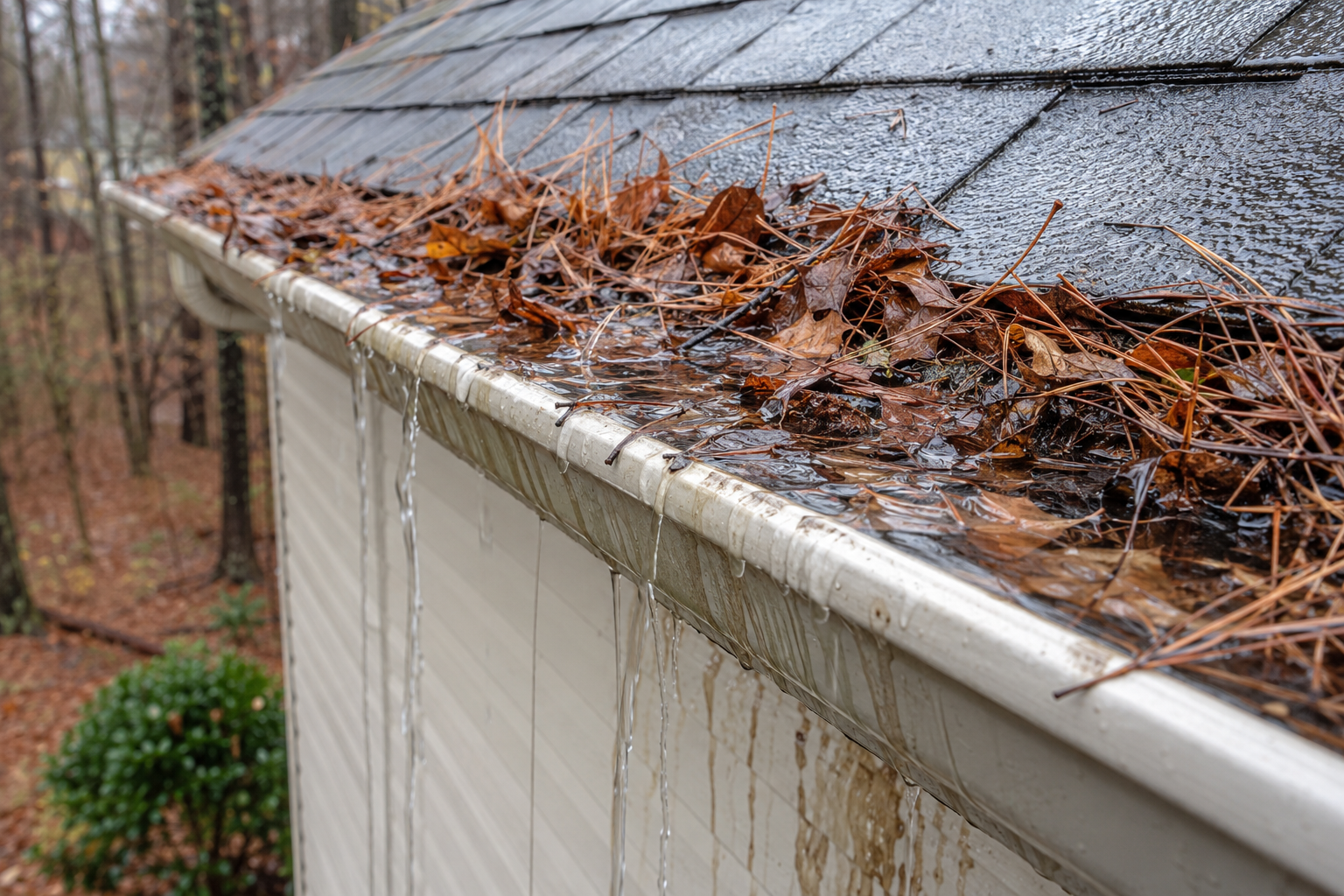
Clogged gutters
Leaves and compacted debris block the path to the outlet. Water rises, spills over the front edge or moves behind the gutter. Persistent moisture can stain siding, soften fascia and saturate planting beds.
What this can look like: Look for a waterfall effect, dark overflow lines and plants or mulch directly below a low point.
02
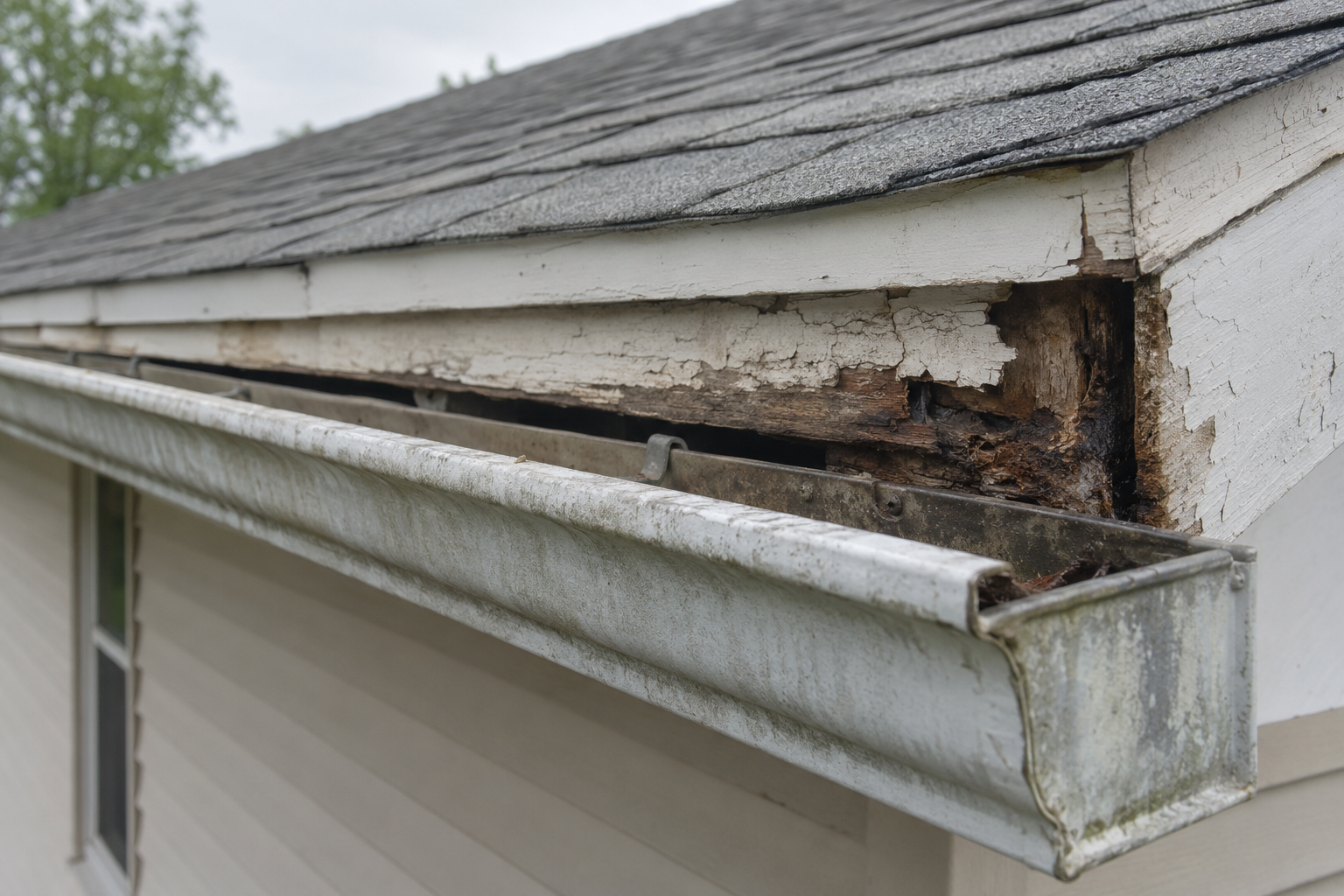
Loose, leaking or poorly pitched gutters
Failed hangers and low spots concentrate weight and water. Leaking seams repeatedly wet the same area, while poor pitch leaves standing water that accelerates wear and attracts insects.
What this can look like: Look for gaps behind the gutter, peeling paint, soft wood, sagging runs and drips that continue after rain.
03
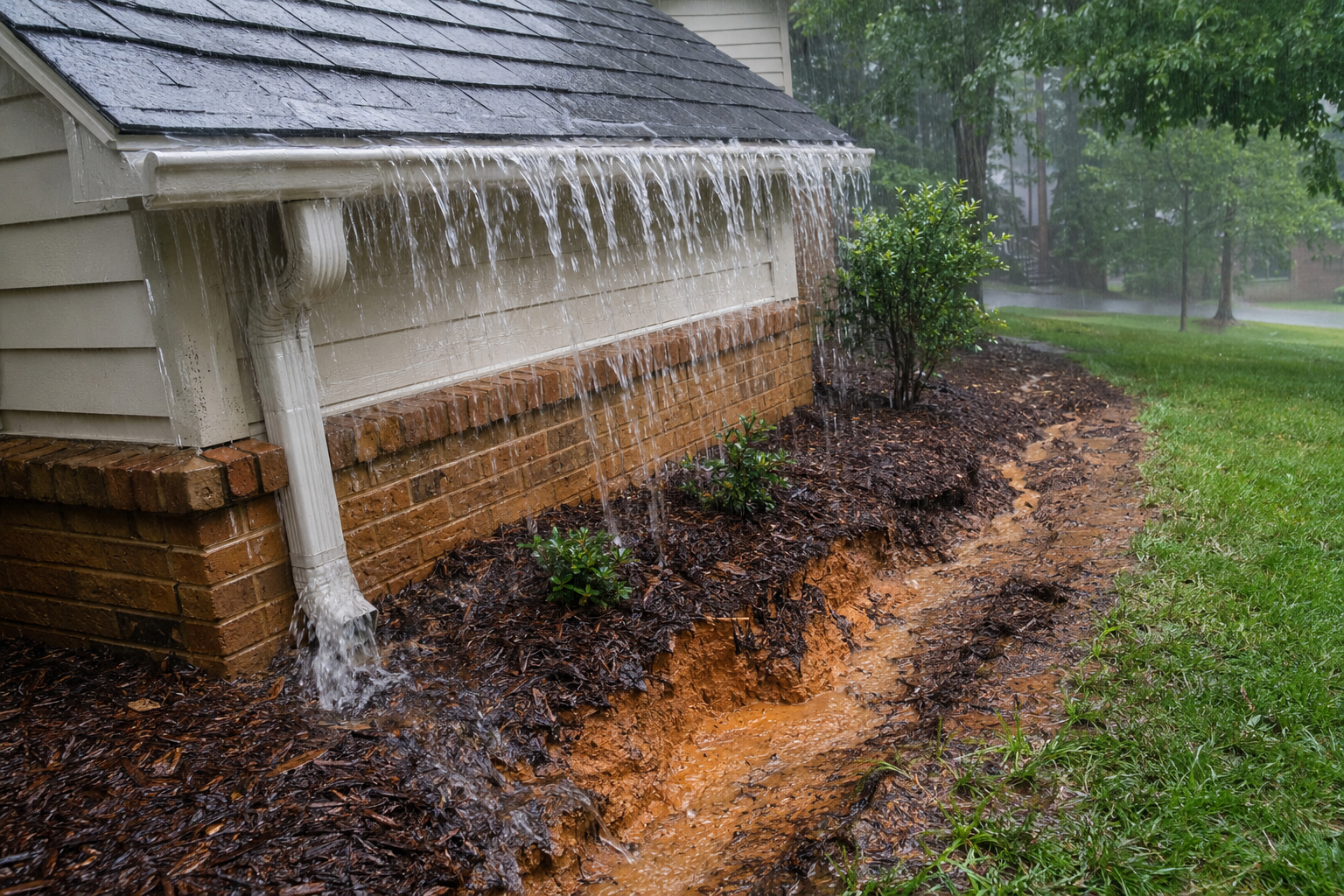
Undersized gutters and downspouts
A clean system can still overflow when a large or steep roof sends more water to a short run than its outlets can move. Valley locations are especially demanding. Larger gutters alone do not solve too few or poorly placed downspouts.
What this can look like: Look for overshooting at roof valleys, repeated washout and overflow that happens even when the system is clean.
Potential downstream damage
Rot at fascia, soffit and roof edges
Staining or deterioration of siding and masonry
Landscape erosion and washed-out mulch
Water collecting beside foundation walls
Crawl-space or basement moisture pressure
Ice-related stress during uncommon winter freezes
Important: gutters are one part of the drainage system. Grading, underground drains, waterproofing and roof design may also contribute; gutter work alone cannot be assumed to cure every moisture problem.