BeforeAfter
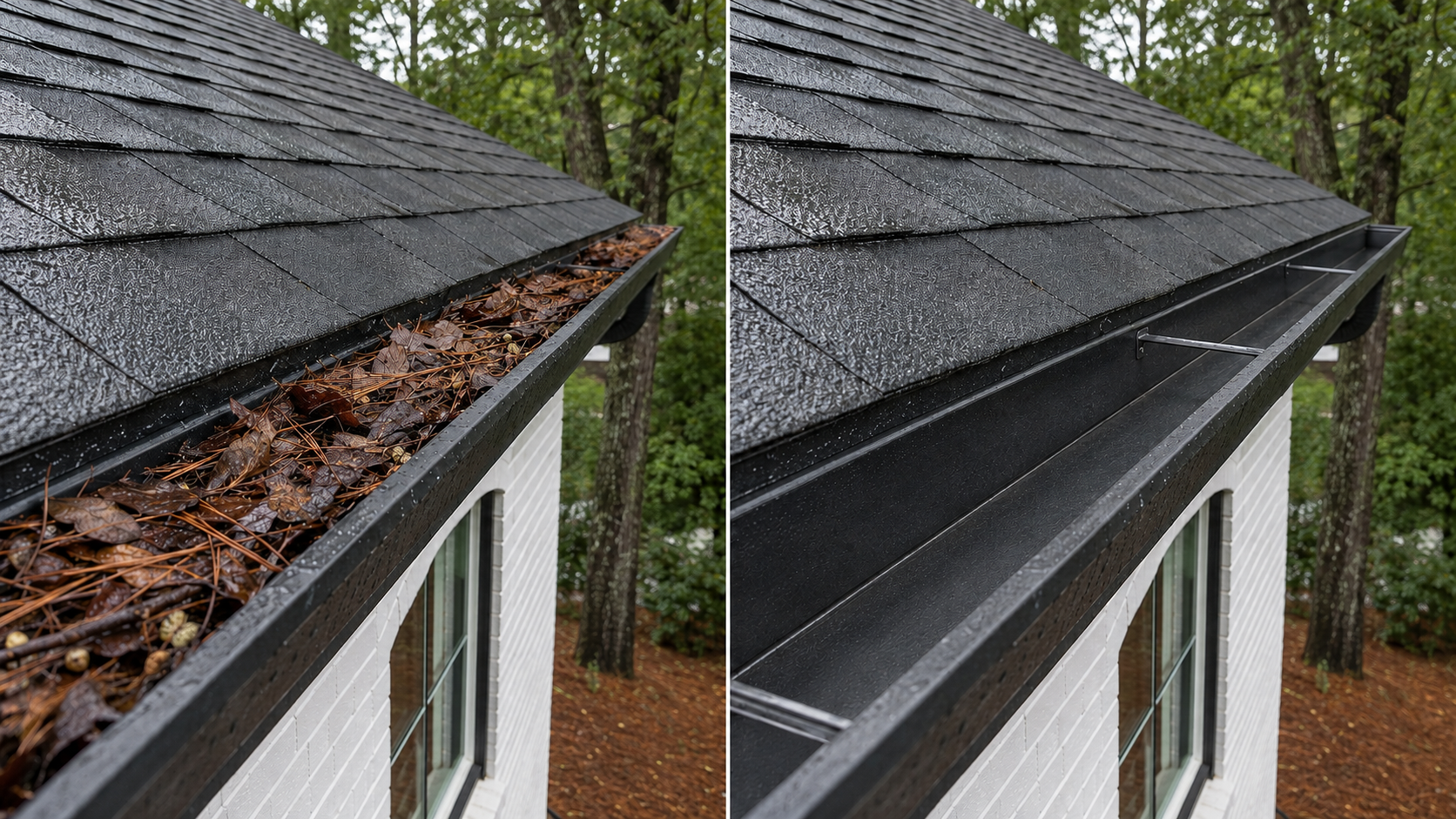
Leaf-packed gutter channel
BeforeWet leaves and decomposing material restrict the channel and hold moisture against the gutter.
AfterThe open channel, hangers and drainage path are visible again so water can move toward the outlet.
North Georgia gutter cleaning
A useful gutter cleaning does more than remove the leaves you can see. It restores the water path through the channel, outlets and downspouts—and identifies the conditions that may cause the next overflow.
Before and after
These examples show three common failure points found beneath North Georgia hardwoods and pines. Each result restores access for water; it does not conceal repairs that may still be needed.
BeforeWet leaves and decomposing material restrict the channel and hold moisture against the gutter.
AfterThe open channel, hangers and drainage path are visible again so water can move toward the outlet.
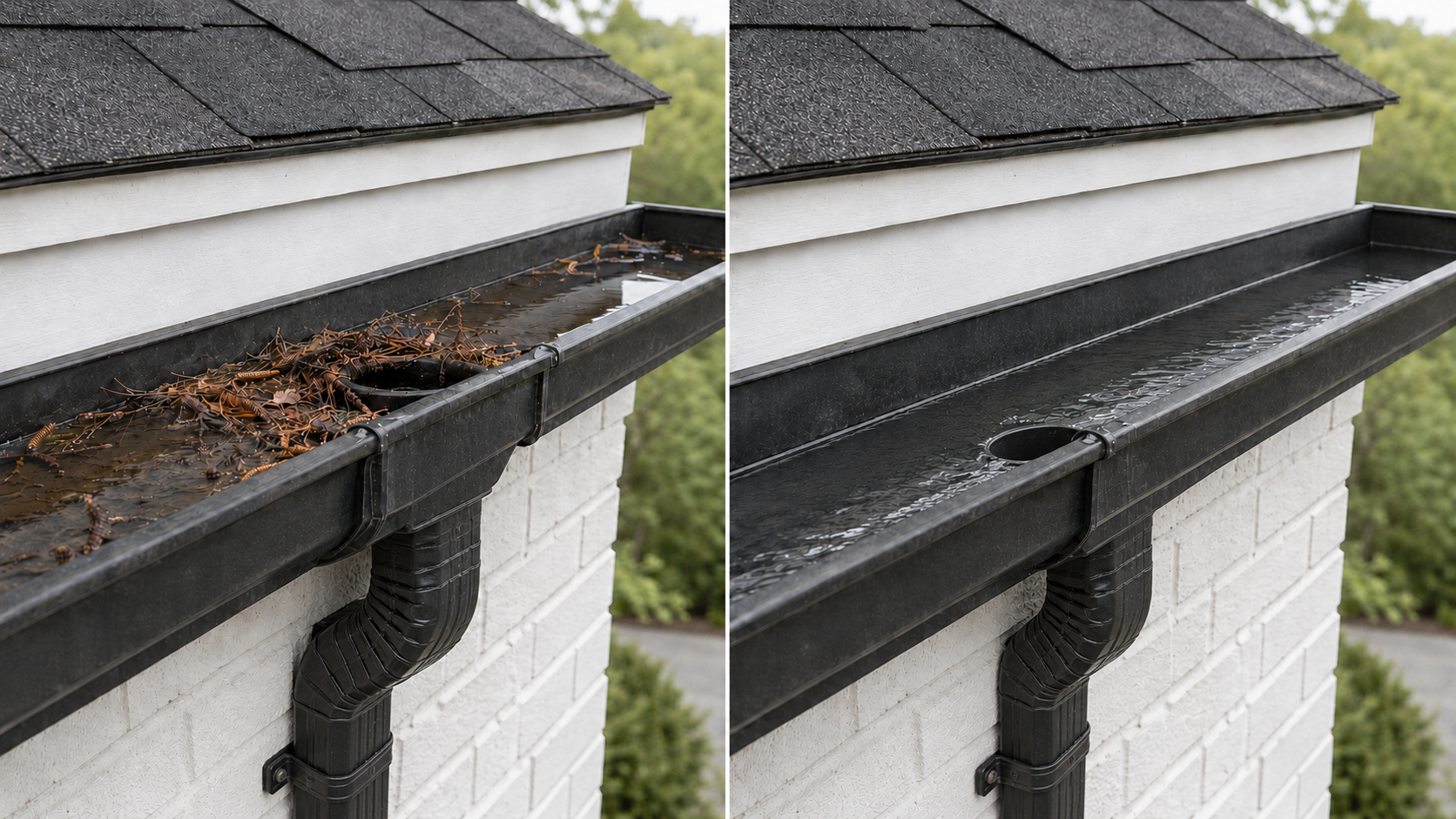
BeforeSmall sticks, pine needles and roof grit mat together over the smallest opening in the system.
AfterThe outlet is exposed and flow-tested instead of assuming the vertical downspout is clear.
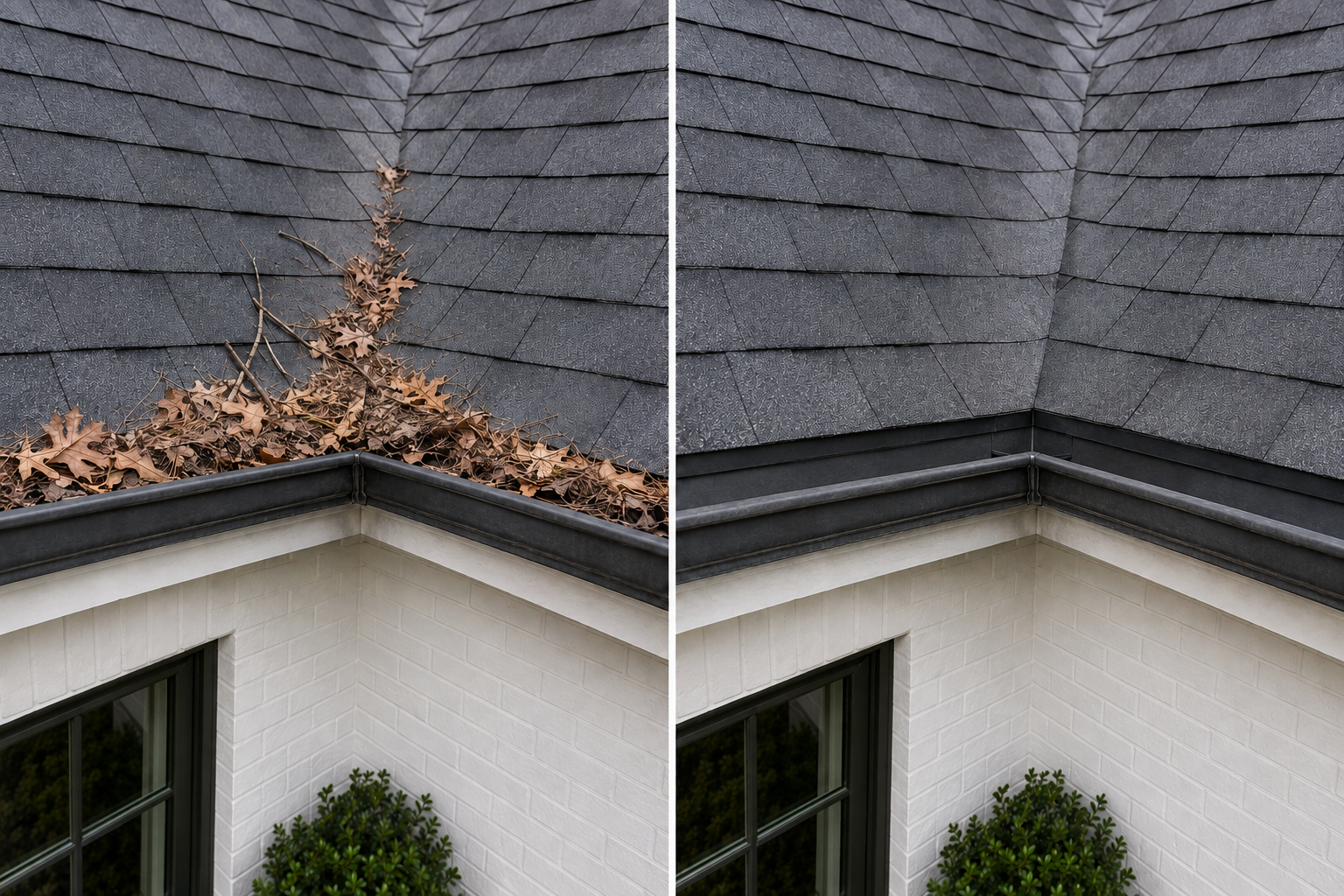
BeforeA roof valley concentrates leaves, sediment and stormwater into a short section of gutter.
AfterThe corner and transition are cleared so concentrated runoff has the full channel available.
Representative service examples. Actual conditions vary by roof access, tree cover, gutter design and maintenance history.
The cleaning process
The service scope should be clear before anyone climbs. Roof pitch, stories, gutter guards and underground drains can change the equipment, time and testing that are practical for the property.
Confirm roof height, pitch, landscaping, electrical hazards and safe ladder placement. Overflow marks, sagging runs and problem valleys are noted before debris is disturbed.
Leaves, pine needles, seed pods and compacted organic material are removed from the full gutter run—not pushed toward the nearest outlet.
The transition from gutter to downspout is cleared by hand. Accessible downspouts are checked for hidden obstructions instead of relying on a clean-looking top opening.
Where site conditions permit, a controlled flow check confirms that water reaches the outlets and exposes low spots, leaks or concentrated runoff that cleaning alone cannot correct.
Removed material is collected from roofs, walks and planting beds. Visible repair concerns are documented so the homeowner can separate maintenance from needed correction.
What cleaning can reveal
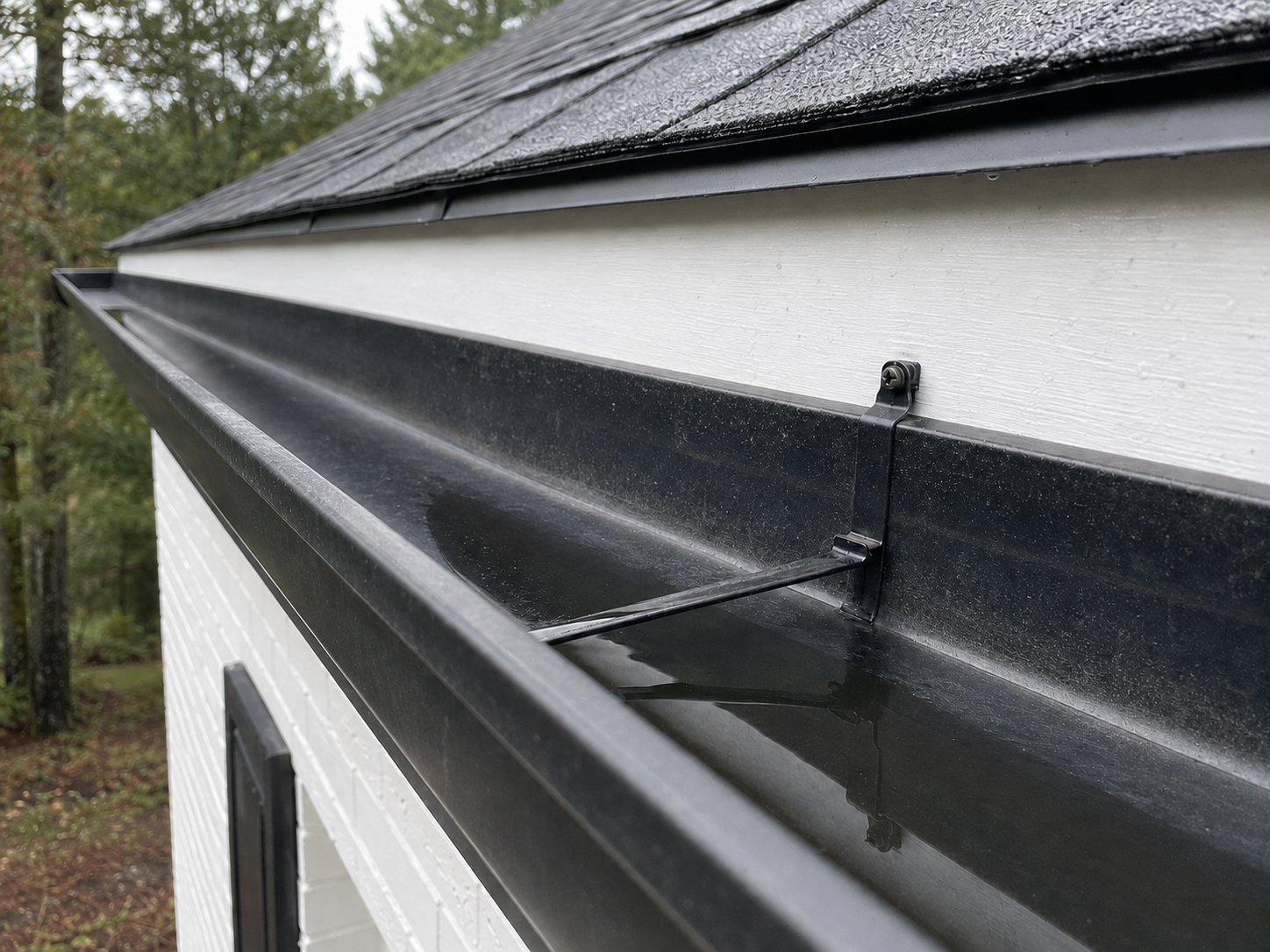
Water remaining after the channel is cleared may indicate poor pitch, a settled run or an undersized outlet.
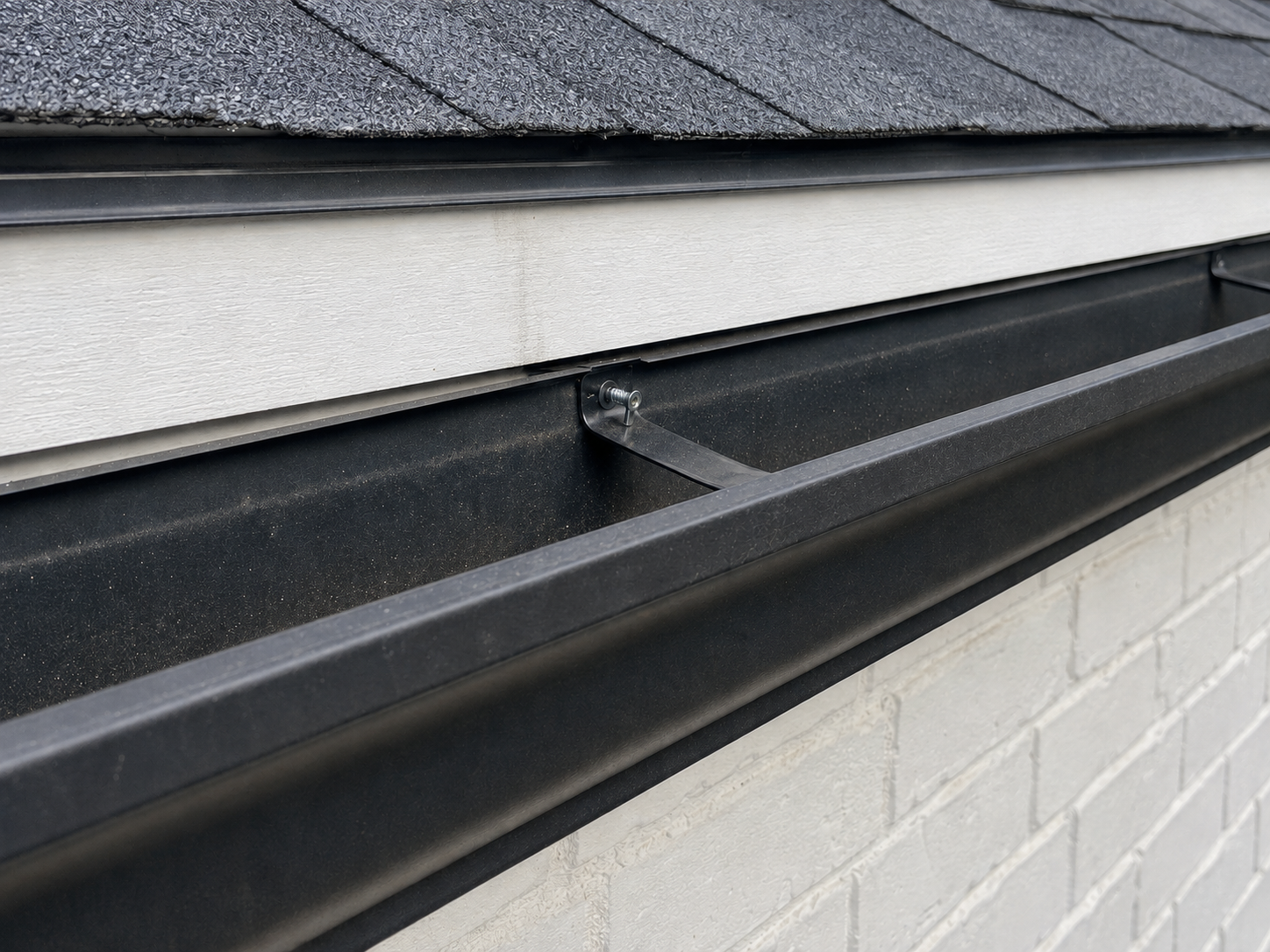
Movement at hangers, spikes or fascia connections can allow water to track behind the gutter.
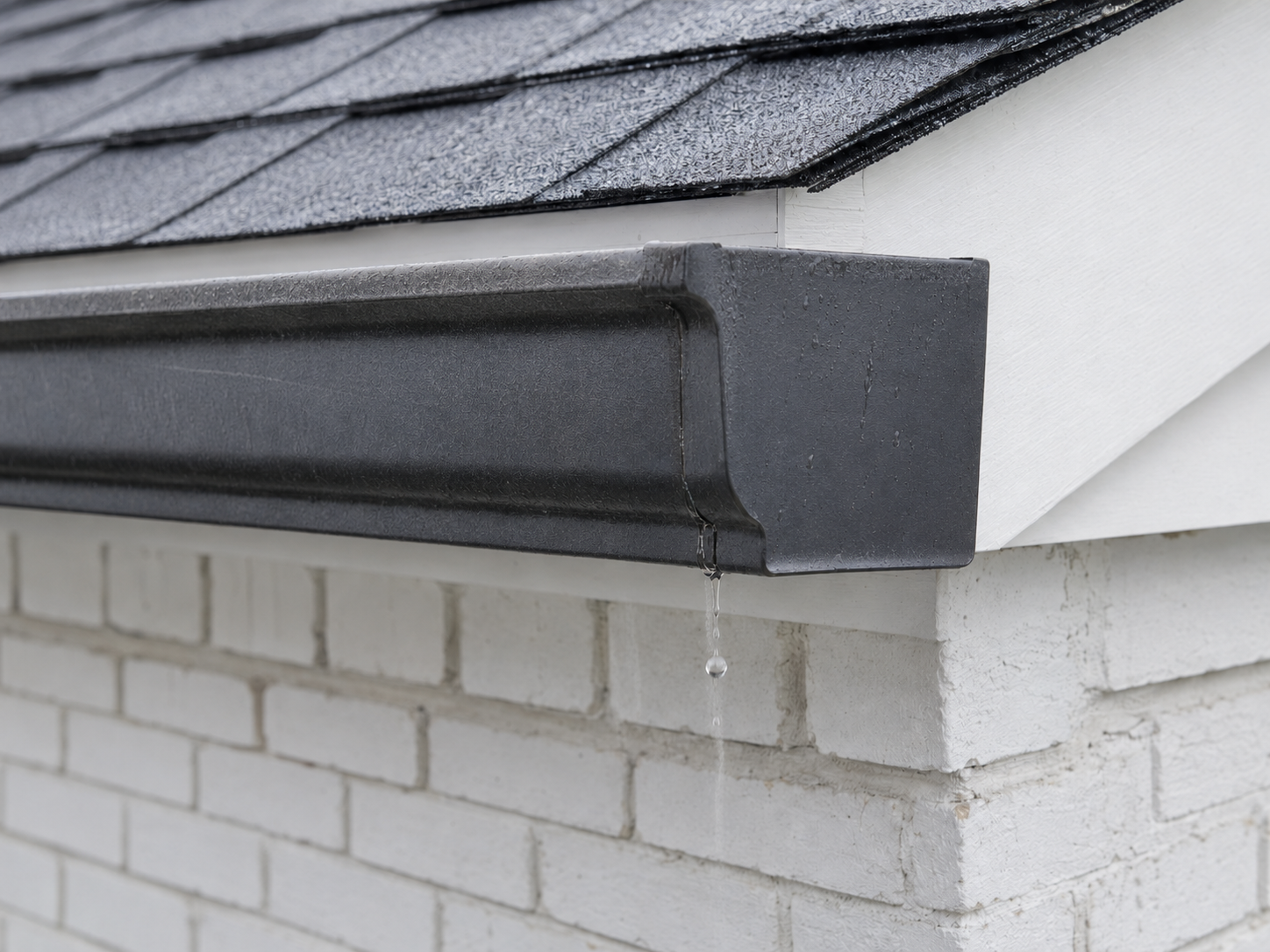
Cleaning exposes joints and end caps so active drips can be separated from simple overflow.
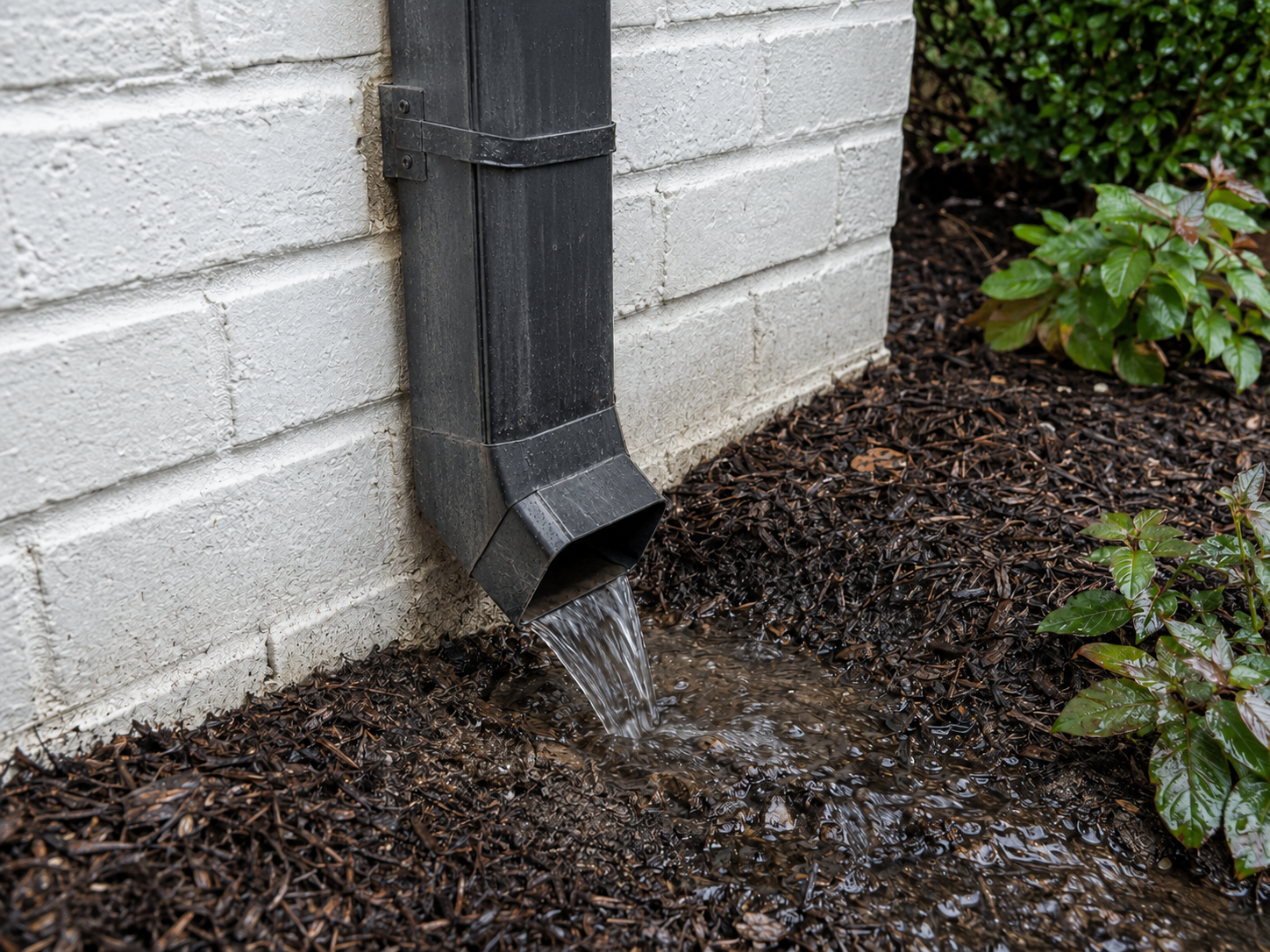
A clear downspout can still create foundation trouble when it empties beside the home or into a blocked drain.
A practical starting point
Open lots: One annual cleaning after the main leaf drop may be sufficient.
Mature hardwoods: A spring seed-and-tassel check plus a late-fall cleaning is a sensible baseline.
Pines or heavy canopy: Pine needles shed throughout the year; high-volume valleys and difficult outlets may justify an additional check.
Frequency is a property-specific recommendation, not a universal service interval. Inspect after major storms whenever overflow or discharge problems appear.Ongoing roofline maintenance
A maintenance plan should reflect the property rather than force every home onto the same calendar. Tree cover, roof valleys, gutter guards and prior trouble spots determine the sensible interval.
Start with the roofline you have
Share your location and what you are seeing. A local professional can confirm safe access, cleaning scope and pricing before service is scheduled.
Request a cleaning assessment