Widespread corrosion
Multiple weak areas, pinholes or deteriorated seams make repeated spot repairs less durable.
Gutter replacement + system planning
A replacement should improve how the roof collects, carries and releases stormwater. Capacity, outlets, downspouts and discharge matter as much as a clean new profile at the roof edge.
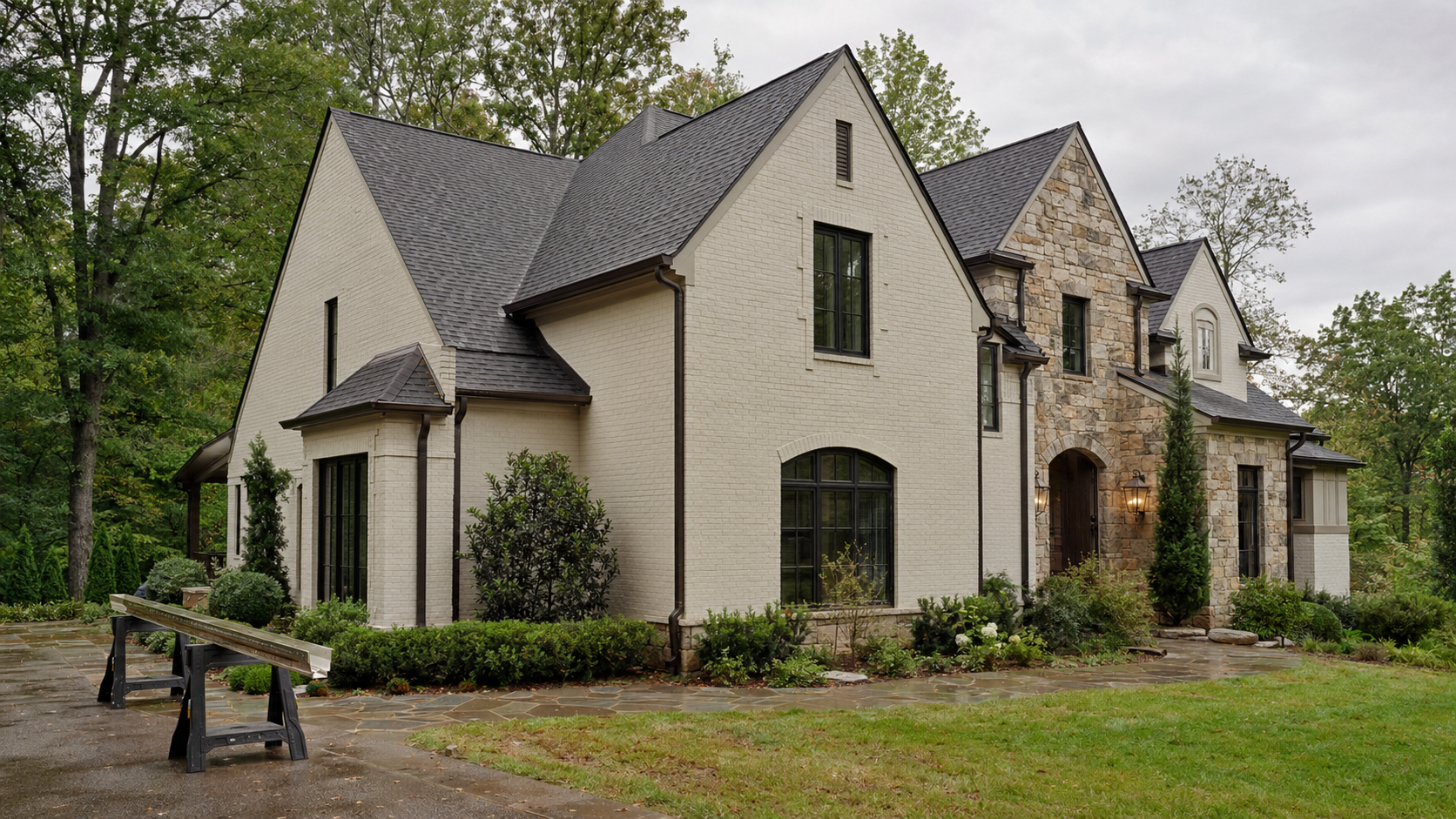
When replacement earns its place
The decision should consider the condition of the metal, attachment surface, capacity and drainage layout—not merely the age of the gutters.
Multiple weak areas, pinholes or deteriorated seams make repeated spot repairs less durable.
Long runs that repeatedly sag may point to attachment, fascia or layout problems beyond one hanger.
Steep roofs, large collection areas and concentrated valleys can overwhelm small channels or too few outlets.
A new gutter is an opportunity to improve outlet count, downspout placement and safe discharge—not repeat the old layout.
Plan the complete water path
Steeper roofs and large planes can deliver runoff quickly. Valleys may concentrate multiple planes into one short section.
A larger channel still needs enough outlet area and well-placed downspouts to move water out of long runs.
Extensions, surface grading and accessible underground drains determine whether roof water actually leaves the foundation zone.
Sizing should be confirmed for the individual roof and local conditions. A six-inch gutter is not an automatic cure for a blocked outlet or poor discharge path.
Material + exterior design
Match the trim for a quieter roofline, use a dark accent to define the architecture or choose true copper when the material and evolving patina belong in the exterior design.
Replacement process
A premium result begins before fabrication. The existing failure pattern and the roof’s concentrated flow should inform the new layout.
Roof area, pitch, valleys and long runs determine where water is concentrated.
Choose channel size, outlets and downspouts as one connected water-management system.
Select aluminum or copper, profile and color in relation to trim, roof, masonry and architecture.
Remove failed material and identify fascia repairs before the new gutter is expected to carry load.
Set consistent pitch, secure appropriate attachment, seal transitions and confirm the discharge path.
Preserve future options
Outlet placement, guard selection and downspout routing should remain serviceable after installation. A beautiful system that cannot be inspected or cleaned creates avoidable ownership problems.
Compare gutter guard systems →Start with the existing system
Share photos of the full elevation, trouble spots and discharge locations. A local professional can confirm repair viability, replacement scope and material options.
Request a replacement assessment